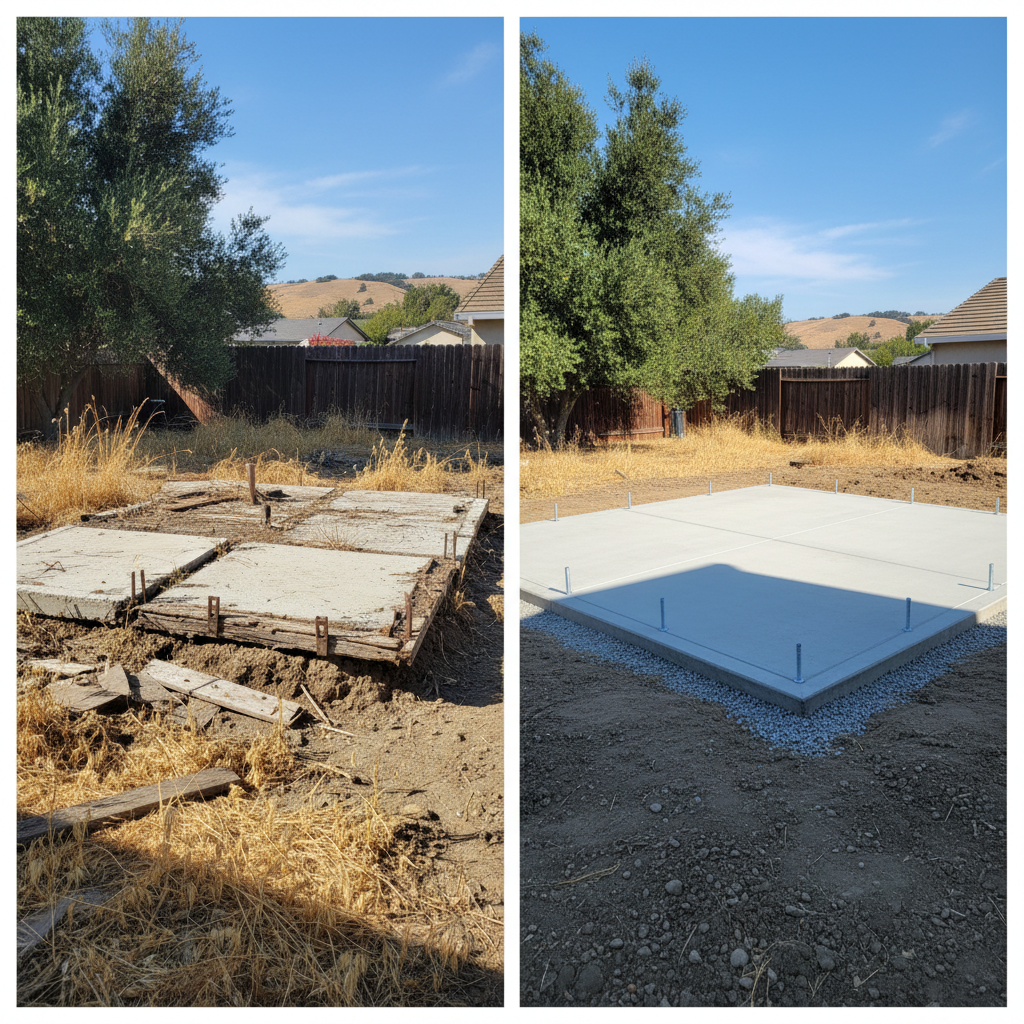
Alright, so you're thinking about adding a shed to your property here in Tracy. That's a smart move – extra storage, a workshop, maybe even a quiet office space away from the main house. But before you even think about the walls or the roof, you've got to sort out the foundation. This is where a lot of folks get stuck, weighing their options between a concrete slab and a gravel pad. Both have their place, but one is usually a better fit for most situations, especially around here.
Concrete Slab: The Cadillac of Foundations
Let's start with concrete. When you pour a concrete slab, you're building something pretty permanent. It's solid, unmoving, and provides a perfectly level surface for your shed. You won't have to worry about settling, shifting, or critters digging underneath as much. For a larger shed, say anything over 12x16, or if you're planning on storing heavy equipment like a tractor, a motorcycle, or even a classic car, concrete is usually the way to go. It can handle a serious load without flinching.
Durability? Unbeatable. A well-poured concrete slab will last longer than your shed, probably longer than your house if we're being honest. Maintenance is practically zero once it's cured. Appearance-wise, it's clean and professional, especially if you get a nice smooth finish. However, all that strength and permanence comes at a cost. Concrete is significantly more expensive than a gravel pad, both in materials and labor. You've got to excavate, build forms, lay down rebar or mesh, and then pour and finish the concrete. It's a job that often requires pros, and it's not a quick weekend project.
Another thing to consider, especially in areas like Tracy with our clay-heavy soils, is proper drainage. You need to make sure the slab is slightly elevated and sloped correctly to shed water away, otherwise, you could end up with pooling or moisture issues around the base of your shed. And once it's in, it's in. Moving that shed later? Forget about it without serious demolition.
Gravel Pad: The Practical Workhorse
Now, let's talk about the gravel pad. This is what we recommend for most standard sheds – your typical garden shed, tool shed, or even a smaller backyard office. A gravel pad involves excavating a few inches, laying down a weed barrier, and then filling it with compacted gravel, usually crushed rock or decomposed granite. You'll often build a perimeter frame, typically out of treated lumber, to hold the gravel in place and give it a clean edge.
Cost is the big win here. A gravel pad is much more affordable than a concrete slab. You can often do a lot of the work yourself if you're handy, saving on labor costs. It's also much quicker to install. We're talking a day or two versus multiple days for concrete, including cure time.
Durability is excellent for its purpose. A properly installed and compacted gravel pad will provide a stable, level base for your shed for many years. It also offers fantastic drainage. Water just filters right through the gravel, which is a huge plus for preventing moisture buildup under your shed floor – something that can cause rot and mildew. This is particularly good for our hot Tracy summers and occasional heavy rains; you don't want water sitting around your shed's foundation.
Maintenance is pretty minimal. You might need to top it off with a little fresh gravel every few years if it settles or washes away a bit, but that's about it. Appearance can be quite natural and blend well with your landscaping, especially if you choose a nice decorative gravel. Plus, if you ever decide to move your shed or remove it entirely, a gravel pad is much easier to modify or dismantle than a concrete slab.
Which One Should You Pick for Your Tracy Home?
Honestly, for 90% of the sheds we build and install at Tracy Sheds & Structures, a gravel pad is the smarter, more cost-effective, and perfectly adequate choice. Unless you're putting a massive structure that's going to house heavy machinery or serve as a full-blown garage, the benefits of a gravel pad usually outweigh those of concrete.
Think about it: better drainage, lower cost, easier installation, and it's less permanent if your needs change down the road. For a standard backyard shed, a well-built gravel pad will give you all the stability and longevity you need without breaking the bank or creating a permanent fixture you might regret later. We've seen plenty of sheds on gravel pads that have stood strong for decades right here in neighborhoods from South Tracy to Mountain House. Just make sure it's properly excavated, compacted, and leveled. That's the key to a successful gravel foundation.
So, save your money, get a great foundation, and get that shed up and running faster. You'll be glad you did.